

My time at hockey high school
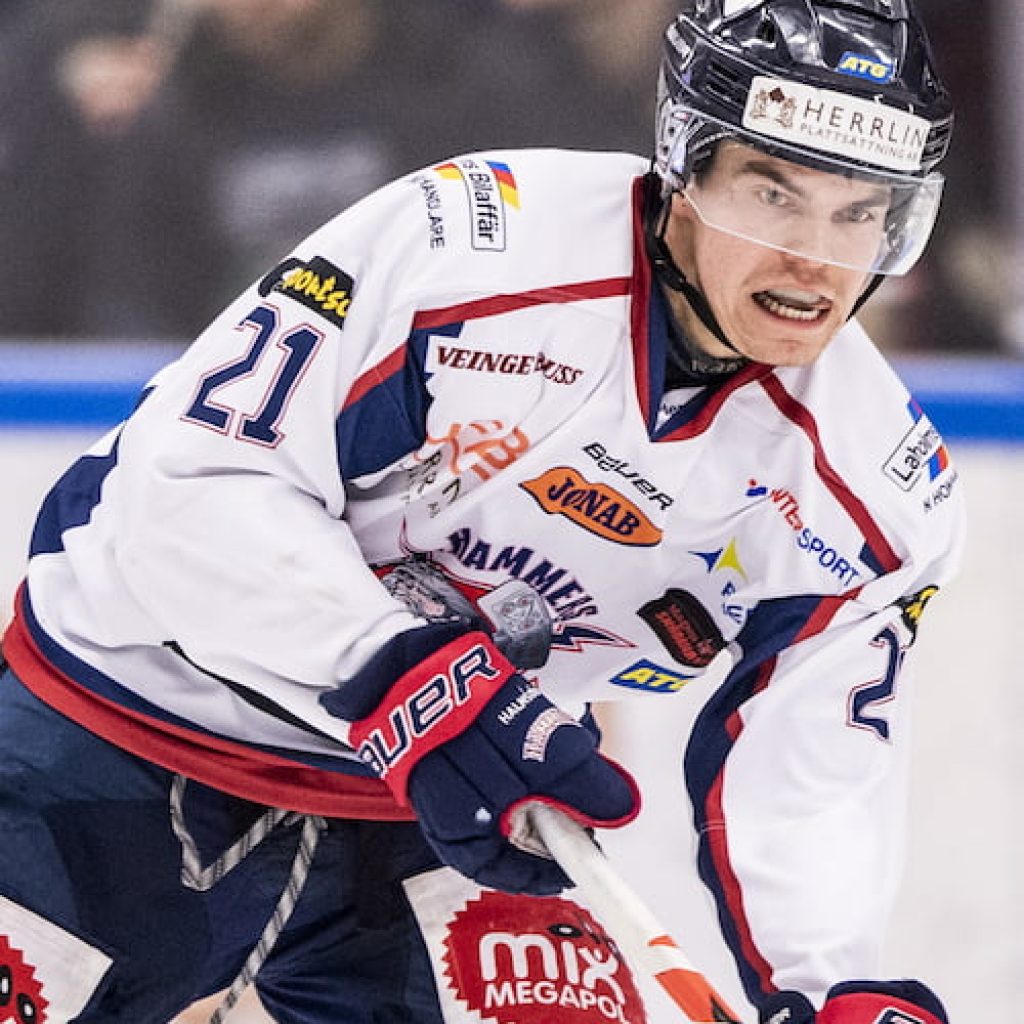
My name is Ludvig Nilsson and I work as a sports psychology consultant. I run the company Developmind Sport Psychology Consulting AB. After 20 years as a hockey player, I now want to share my experiences from my time at hockey high school. During my time at hockey high school, I belonged to the Rögle BK organization and played there from U16 to J20. In my opinion, hockey high school is a great opportunity to combine hockey with school. It includes more training sessions and more individual ice and physical training sessions.
Get help from your teammates
The first year is definitely the most demanding. Since I grew up in Helsingborg, my move wasn't that far, as I moved to Ängelholm. But moving away from home at the age of 16 is a challenge, and to cope with such a challenge, you need to be mentally prepared and have good support from people close to you. I was lucky enough to get into a hockey high school close to home, which meant I had great support from my parents. But one of the best sources of support you can have during high school is your teammates, who are going through the same transition. For example, if you find cooking difficult, my tip is to get together with a few people and cook together. The same goes for schoolwork. If you find it difficult to discipline yourself to do your schoolwork, it also helps to sit down with either classmates or teammates. As I said, get help from those around you, especially during the first year when so much is new.
NIU gives you a good foundation, but no guarantee of becoming a full-time professional
As I said, hockey high school is a great opportunity to develop and create conditions for a future career in ice hockey, but it is by no means a guarantee. One thought I had, and which I think many still have, is that if you get into an NIU high school, you will be able to make a living from hockey in the future. Of course, it creates great conditions for development, but it is still up to you to do the work. Based on my own experience, I had very enjoyable and educational years at hockey high school, where I grew both as a person and as a player. Looking back, I am very grateful that I took both hockey and my studies seriously. This made it possible for me to apply to college and get a degree. What I want to say with this is that you should give yourself the chance to become as good a hockey player as possible while also taking care of your schoolwork to give yourself more opportunities in the future.
Prepare yourself mentally for a tough competitive situation
During my time at hockey high school, I found myself in an environment with very talented players where competition was fierce. In many cases, fierce competition is something that drives players' development forward. But for some players who come from outside and from smaller clubs, fierce competition can be difficult to handle at first. This is usually because the player has been the "star" of their home club. But when the player then joins a larger elite club, they may not stand out in the same way and may not get as much ice time as they are used to. If the player is also not mentally prepared for how to handle such a situation, this can affect their self-confidence.
LIU may also be the right way forward
Another experience I wanted to share is that hockey careers can look very different. Just because you didn't get into an NIU high school doesn't mean your career is over. I had the privilege of playing for Rögle BK for four seasons, for which I am very grateful. However, I have a close friend who took a different path in his career. He didn't get into an NIU high school and went to LIU instead. He got to play for his hometown club, where he was very happy. He lived at home and had his family and friends around him. During his third year of high school, he was recruited to an elite club and got to play two seasons in J20 SuperElit. He then got the chance to play several games in the SHL. Today, he plays in HockeyAllsvenskan and is now in his fifth season as a full-time professional. What I want to say with this story is that a career can look very different. The most important lesson I want to share is that, in the end, you are responsible for your own development, regardless of which high school, club, or league you play in.
Are you curious about how you can develop your mental skills and become mentally stronger?
Book a meeting with me at ludvig@developmind.se or via www.developmind.se
Ludvig Nilsson
| Season | Team | League |
|---|---|---|
| November 2010 |  Jonstorps IF U16 Jonstorps IF U16 | U16 Swedish Championships |
| 2011-12 | Rögle BK U16 | U16 Swedish Championships |
| - | Rögle BK U18 | J18 Elite |
| 2012-13 | Rögle BK U18 | J18 elite |
| - | Rögle BK U18 | J18 Allsvenskan |
| 2013–14 | Rögle BK U18 | J18 Elite |
| - | Rögle BK U18 | J18 Allsvenskan |
| 2014–15 | Rögle BK U20 | J20 Super Elite |
| 2015–16 |  Almaguin Spartans Almaguin Spartans | GMHL |
| 2016-17 |  Philadelphia Flyers Philadelphia Flyers | EHL |
| 2017–18 | Köping HC | HockeyEttan |
| 2018-19 | Helsingborg HC | HockeyEttan |
| 2019-20 | Halmstad Port. | HockeyEttan |
| 2020-21 | Halmstad Port. | HockeyEttan |
| 2021-22 | Hanhals IF "A" | HockeyEttan |